This is not about making a specialty product. It is about preserving the memory of a place — and letting people hold that memory in their hands.
Why gin?
Sake depends on rice. Shochu leans on sweet potato or barley. Wine cannot exist without grapes. Gin is different — it is one of the few spirits that can capture an entire landscape in a single bottle.
Our botanicals come from the fields, forests, and hillsides of Shimotsukata:
A cedar with a story
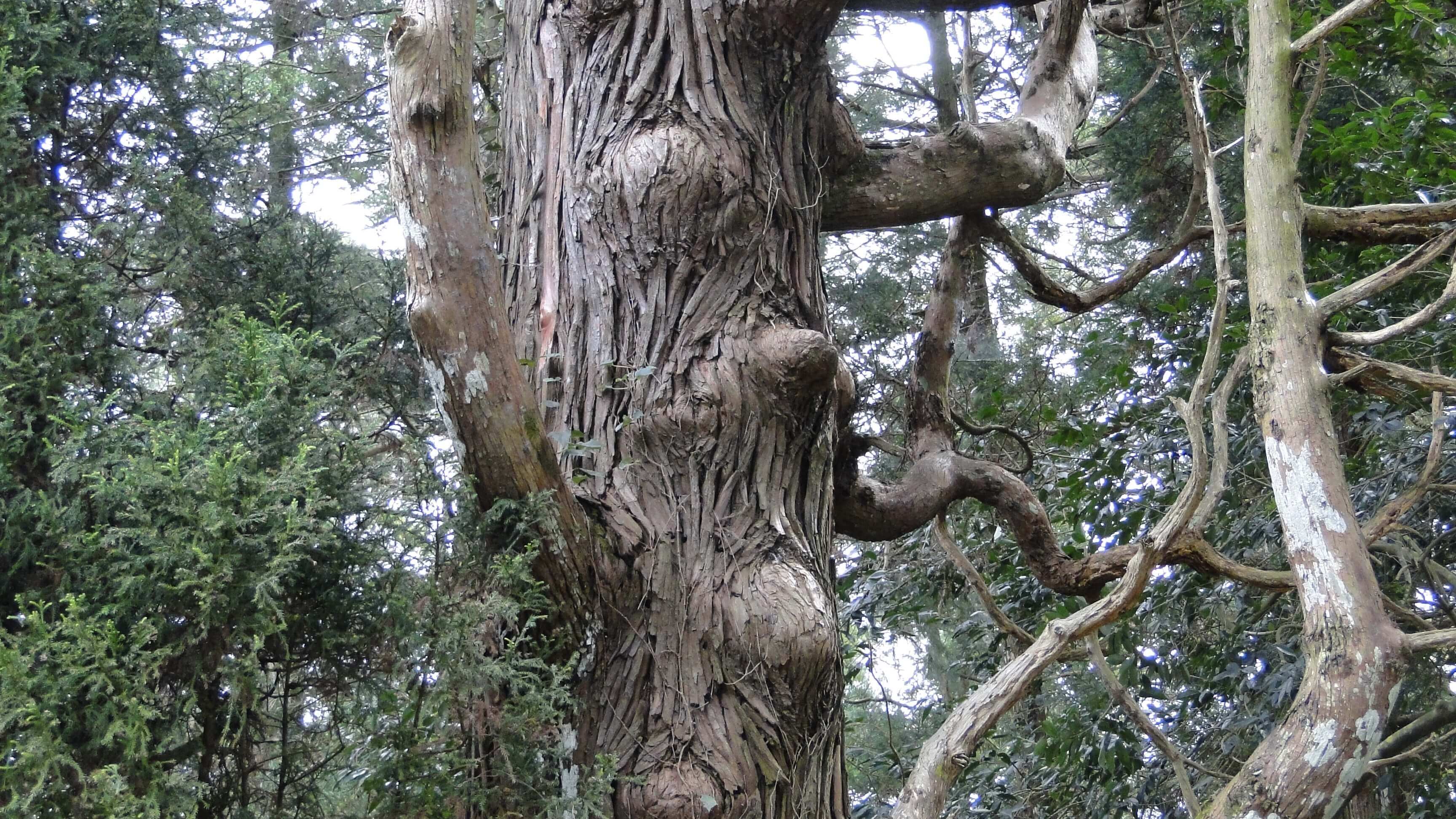
Beside the Hayama-sama shrine — the spiritual heart of our community — stand roughly fifteen cedar trees, each more than four hundred years old. One of them has been struck by lightning repeatedly over the decades, and kept standing. In the summer of 2024, it was struck once more. This time, its growth stopped.
Left untouched, it will die standing within two to three years. The window to receive its life while it still breathes — to honour it rather than watch it rot — is now.
- ~400 years ago A cedar seed takes root beside the shrine
- For four centuries It watches over the village — through wars, droughts, and generations
- Many times over Struck by lightning, again and again — and each time, it survives
- Summer 2024 A final, fatal strike. Growth stops. The same year our community launched its Rural RMO.
- Now Still alive. The parishioners decide: we receive its life while we still can.
- Soon Timber becomes boards and botanical chips. Each harvest season, Meyer lemon meets cedar in the still.
- Every autumn, forever after A bottle of gin is offered to Hayama-sama — the cedar's spirit, distilled.
Two forms of inheritance
The cedar will not disappear — it will be transformed. The wood is already earmarked for two things:
Why gin answers both questions at once
Two questions drove this project. Why now? Because the tree is still alive, and once it is gone, this window closes forever. Why gin? Because only gin can translate four hundred years of wood and twenty seasons of lemons into something you can hold, smell, and share.
The same tree answers both.
Gin as a platform for the village
A bottle of gin is small enough to carry anywhere and specific enough to tell a story. One bottle can open a door to agriculture, tourism, shrine culture, local design, and international curiosity — all at once.
Where we are headed
Our long view is simple: a village where people can say "Shimotsukata means lemon" — and then, "Shimotsukata means craft gin" — and finally, "I'd love to go there someday." A place where farmland is tended and livelihoods are built on what the land, the trees, and the people here have quietly been growing for centuries.
"The land holds invisible resources — wind across the terraces, the scent of citrus, the time stored in a 400-year cedar, the labour of every hand that has tended it. We want to distil all of that, and pass it forward."